claverblog
Manufacturing is converting quicker than ever. Brands want shorter production cycles, more customization, and eco-friendly solutions that reduce waste.
This is where Repmold enters the picture — a modern rapid-molding approach designed to speed up prototyping, reduce material usage, and make small-batch production far more efficient.
Whether you’re a product designer, engineer, startup founder, or manufacturer, It offers a set of advantages that traditional mold-making simply cannot match.
This article explains what Repmold is, how it works, what makes it special, and how your business can leverage it to stay ahead in today’s competitive market.
What Is Repmold?
It refers to an advanced rapid replication molding method used to create prototype molds, functional parts, and short-run production units at high speed and lower cost.
Unlike traditional steel molds that take weeks to machine and finalize, Repmold focuses on speed, precision, and flexibility, allowing manufacturers to test ideas and launch products much faster.
Repmold combines:
- Smart mold design
- Advanced materials
- Additive + subtractive production techniques
- Lightweight, replicable tooling
- Improved thermal and mechanical performance
The goal is to deliver accurate molds quickly so that designers can run multiple iterations without long delays or high tooling costs.
Why Repmold Is Becoming a Manufacturing Game Changer
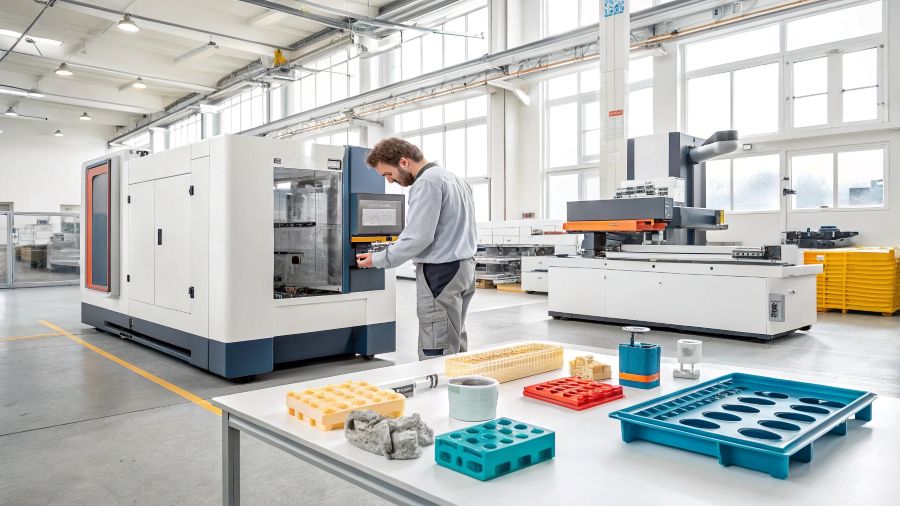
Faster Production Cycles
Traditional mold creation can take 3–8 weeks, depending on complexity. Repmold reduces this to 48 hours to 7 days, making it ideal for:
- Early-stage prototyping
- Testing new designs
- Quick market validation
- Emergency manufacturing
The speed advantage allows businesses to fix issues early instead of discovering costly problems during full-scale production.
Lower Tooling Costs
Instead of heavy steel molds costing thousands of dollars, It uses materials and processes that reduce tooling costs by up to 60%–80%. This is especially useful for:
- Startups
- Small businesses
- Custom product creators
- Limited-edition or seasonal products
With Repmold, manufacturers no longer need to commit to large upfront investments.
High Design Flexibility
Repmold supports:
- Complex geometries
- Fine surface details
- Undercuts
- Thin walls
- Custom textures
- Multi-material designs
This creates room for creativity, innovation, and performance-driven upgrades to existing designs.
Sustainable and Low-Waste Manufacturing
It often uses recyclable or lower-waste materials, making it more environmentally friendly.
Benefits include:
- Reduced machining waste
- Less energy usage
- Fewer discarded trial molds
- Smaller material footprint
For brands focusing on sustainability, It can become a major selling point.
Ideal for Short-Run and Mid-Volume Production
Not every product needs mass production. Many industries rely on controlled or seasonal quantity runs. It excels here by offering:
- Quick mold changes
- Affordable adjustments
- Low-volume feasibility
- Custom batch production
This makes it perfect for industries like medical devices, electronics, consumer goods, automotive prototypes, and packaging.
How Repmold Works: A Step-by-Step Explanation

Step 1: Digital Design Setup (CAD Stage)
Its workflow starts with a digital CAD model. The mold designer prepares files with:
- Parting lines
- Gates
- Cooling channels
- Shrinkage allowances
- Tooling geometry
The software then analyzes the part for manufacturability and suggests improvements.
Step 2: Mold Fabrication Using Advanced Materials
Unlike conventional steel, Repmold solutions often use:
- High-temperature resins
- Composite materials
- Polymer-based tooling blocks
- Hybrid 3D-printed inserts
These materials allow:
- Faster creation
- Good thermal stability
- Smoother detailing
- Flexibility in editing molds
Step 3: Testing & Validation
Before production, each mold undergoes:
- Dimensional inspection
- Thermal performance check
- Injection or casting simulation
- Tolerance verification
The goal is to ensure that the mold functions as intended under real operating conditions.
Step 4: Prototype or Batch Manufacturing
Once validated, the mold is used to produce parts quickly. It is ideal for:
- 1 to 1,500 units
- Functional tests
- Design trials
- Market samples
- Customer demonstration units
Step 5: Rapid Revision & Iteration
The biggest advantage: If something needs improvement, the mold can be revised quickly without recreating a full expensive tool. This speed makes Repmold an innovation accelerator.
Applications of Repmold Across Modern Industries
Consumer Electronics
Used for:
- Device housings
- Buttons
- Clip systems
- Wearable components
Electronics companies benefit from shorter iteration cycles during product development.
Medical Devices
Repmold helps create:
- Prototyping enclosures
- Handheld tools
- Diagnostic parts
- Ergonomic testing units
Its ability to quickly adjust shapes is crucial in medical R&D.
Automotive Components
Useful for:
- Interior parts
- Functional test pieces
- Fit-check models
- Lightweight prototype assemblies
Automotive teams can test early and avoid major redesign expenses.
Packaging and Consumer Products
Ideal for:
- Cosmetic packaging
- Home appliances
- Kitchen tools
- Lifestyle products
Brands can launch limited-edition items much faster.
Industrial Equipment & Tools
Repmold supports:
- Custom jigs
- Fixtures
- Assembly line tools
- Replacement components
Industrial environments rely heavily on fast, reliable tooling.
Repmold vs. Traditional Mold-Making: A Clear Comparison
| Feature | Repmold | Traditional Mold |
| Speed | 2–7 days | 3–8 weeks |
| Cost | Low to moderate | High |
| Flexibility | High | Medium |
| Material usage | Low | High |
| Waste generation | Minimal | Significant |
| Best for | Prototypes & short runs | High-volume production |
It doesn’t replace traditional heavy-duty steel molds—rather, it improves the early-to-mid development stages where speed matters most.
Benefits of Using Repmold in Product Development
More Iterations in Less Time
You can test multiple design versions in a single week. This reduces:
- Failure rate
- Design flaws
- Production delays
Early Market Feedback
Launch small batches to test:
- Colors
- Shapes
- Grip textures
- Features
- Functionality
Customers can give feedback before the final product is mass-produced.
Lower Financial Risk
Traditional molds lock you into high tooling costs.
With Repmold:
- You pay less
- You change faster
- You experiment freely
Improved Product Quality
It allows designers to prototype more variations, refine engineering details, and validate performance early.
This continuous improvement process results in a final product with stronger durability, accuracy, and user-ready quality.
Ideal for Startups and Innovators
Because it offers affordable tooling and fast revisions, startups can test ideas without heavy financial risk.
It supports rapid experimentation, helping innovators bring polished, market-ready products to life efficiently.
Is Repmold Right for Your Business?
You should consider It if your business needs:
- Fast prototyping
- Affordable molds
- Short-run parts
- Frequent design changes
- Small batches for testing
- Sustainable manufacturing
Industries like IoT, cosmetics, automotive research, medical tools, and consumer electronics benefit the most. If you need very high volume (100k+ units), traditional molds still provide long-term durability.
How to Get Started with Repmold
Follow these steps:
- Finalize your CAD design
- Select material and batch size
- Share part specifications with your Repmold provider
- Review manufacturability suggestions
- Approve mold creation
- Test the first shots
- Move into batch production
This simple workflow makes Repmold one of the most user-friendly modern manufacturing solutions.
Conclusion
Repmold represents the future of rapid mold-making. It is fast, flexible, cost-effective, and highly supportive of modern product development cycles. Whether you’re a startup or an established manufacturer, adopting Repmold can help you reduce development time, experiment more freely, and bring products to market with confidence.
FAQs
1. What is Repmold used for?
It is used for fast prototype molds, small batch production, and design testing.
2. How fast can Repmold create molds?
Most molds are ready within 2 to 7 days depending on complexity.
3. Is Repmold cheaper than traditional molds?
Yes, it reduces costs by up to 60–80% for early-stage prototypes.
4. Can Repmold handle complex designs?
Yes, it supports intricate shapes, thin walls, and detailed geometries.
5. Is Repmold good for high volume?
It’s best for prototypes and low–mid volume. Traditional molds suit mass production.